Variables are plain values the run is told outright, such as a test account’s email, a feature flag’s name, or which region a deployment serves. The run reads the value directly, together with the variable’s description. Open a project, go to Settings, and select Variables.
Variables are shown to the model. For anything you wouldn’t paste into a chat, such as a password or a token, use a secret.

Create a variable

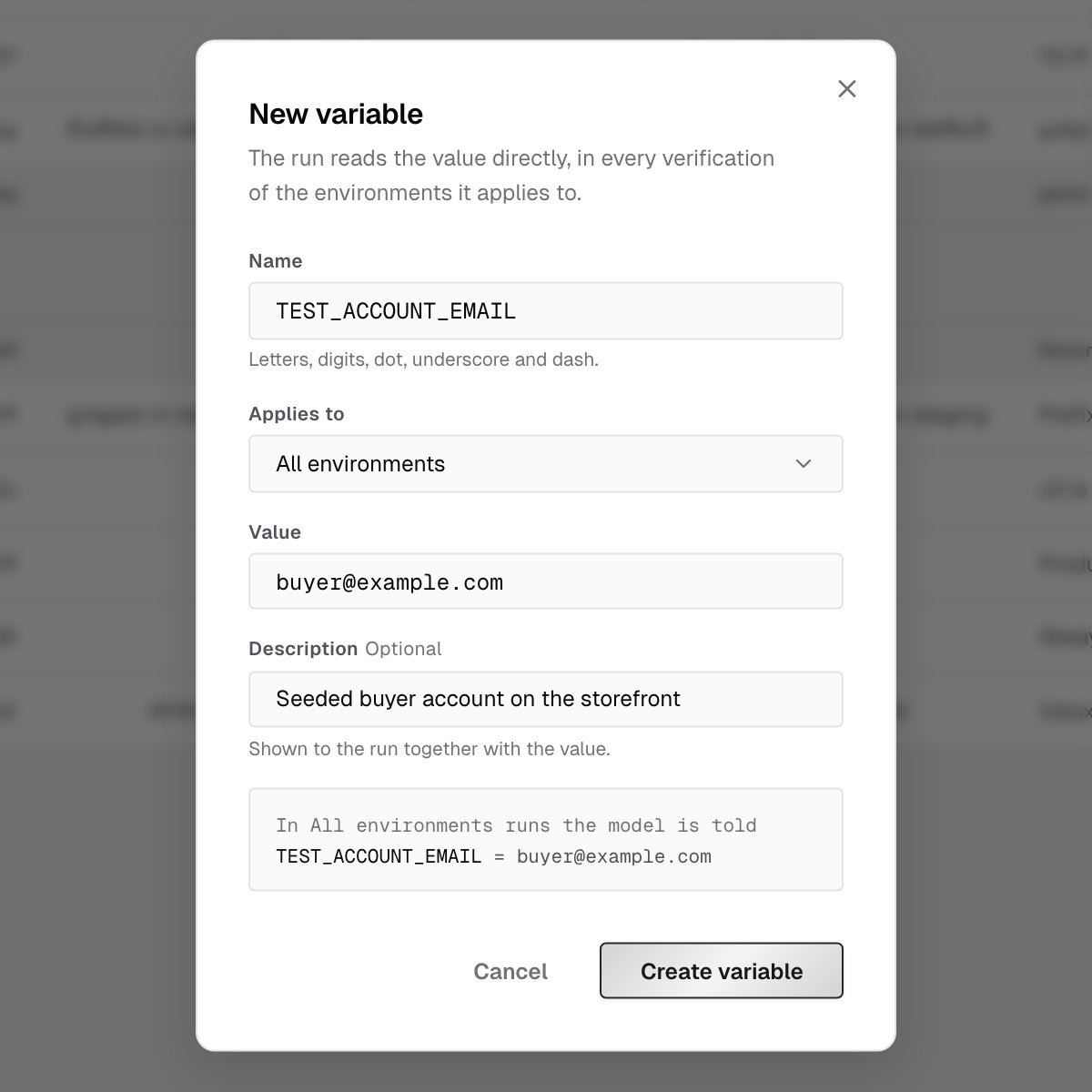
  1. Click New variable.
  2. Enter a Name. Names use letters, digits, dot, underscore and dash.
  3. Under Applies to, choose All environments, or one environment.
  4. Enter the Value and, optionally, a Description of what the value is for. The run sees both.
  5. Click Create variable.
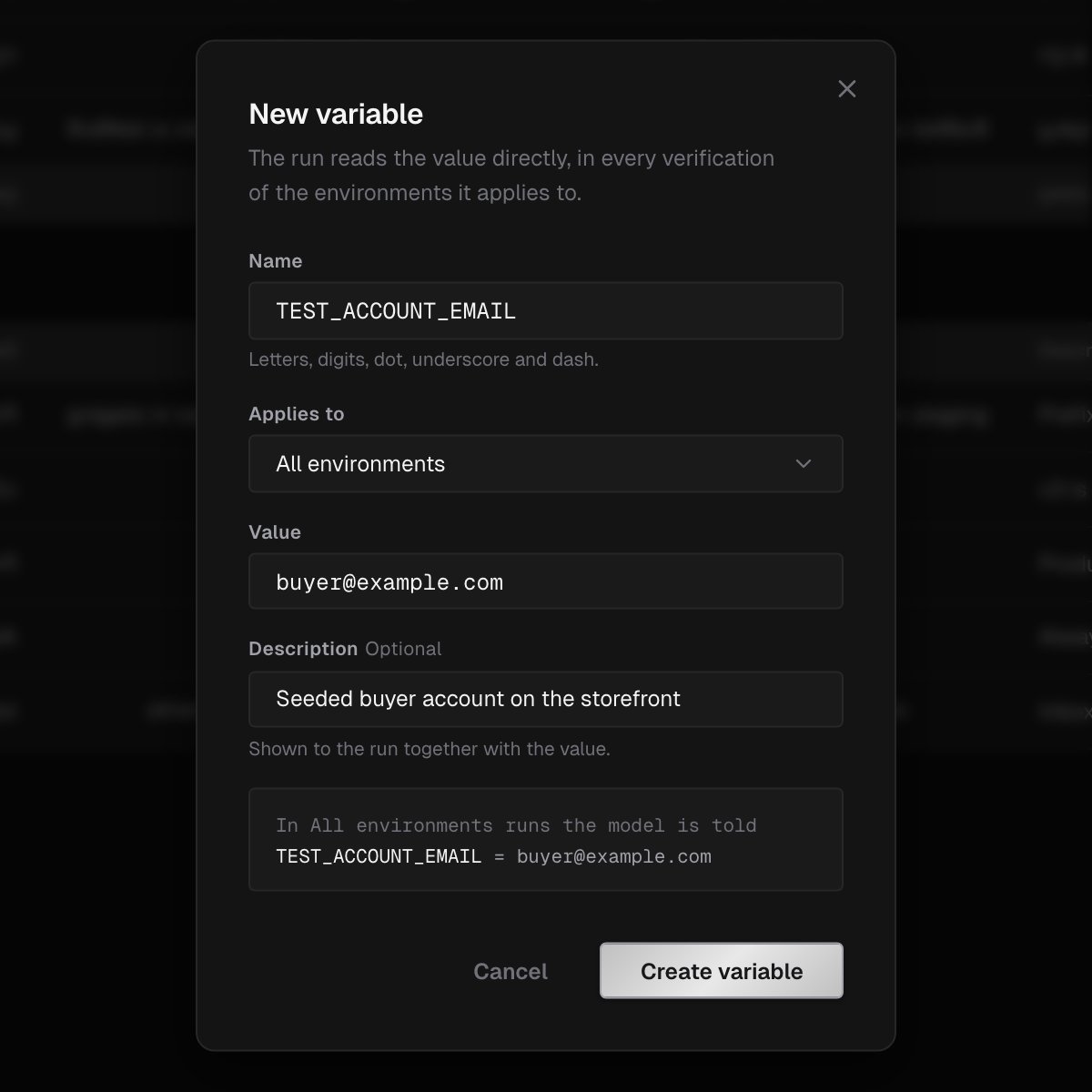
As you type, the dialog previews what the model is told in the runs the variable applies to. New variable dialog with the name TEST_ACCOUNT_EMAIL, Applies to set to All environments, a value and description, and a preview of what the model is told New variable dialog with the name TEST_ACCOUNT_EMAIL, Applies to set to All environments, a value and description, and a preview of what the model is told A variable’s name and scope are fixed once it’s created. To use a different scope, create a new variable.

Shared variables and overrides

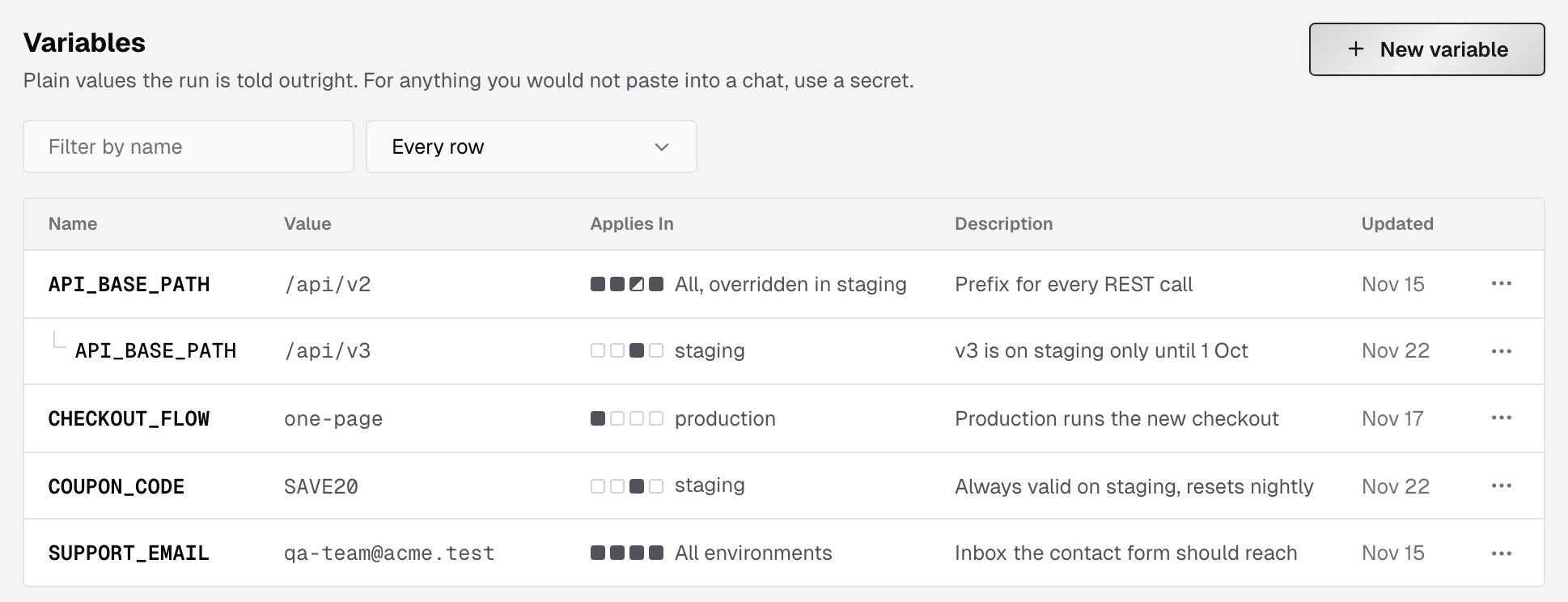
A variable that applies to All environments is shared. To use a different value in one environment, add a row with the same name scoped to that environment. From a shared variable’s actions menu, choose Add override for…. The dialog opens with the name filled in and an environment picked. In that environment, the environment’s row wins. Everywhere else, the shared value applies.

The variables list

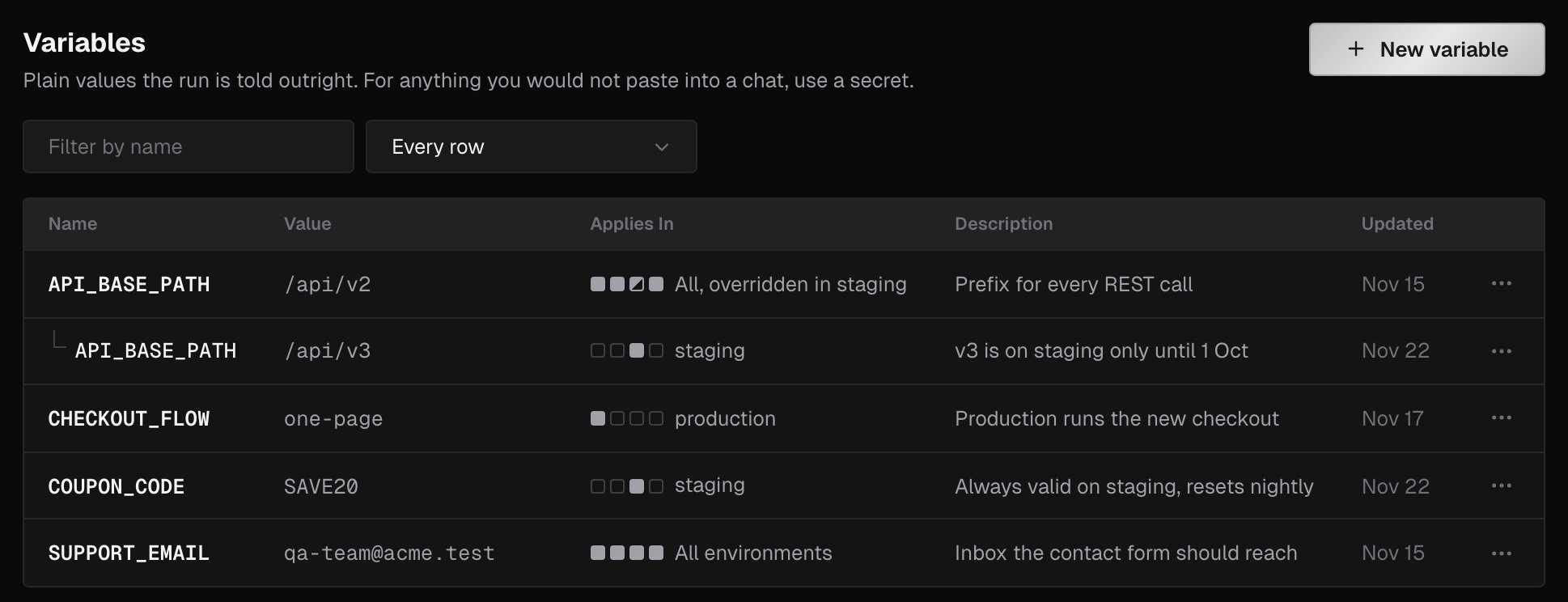
The list shows each variable’s Name, Value, where it Applies In, its Description, and when it was Updated. An override is indented under the shared row it overrides, and the shared row says where it’s overridden. Variables page with the name filter, the Every row filter and five variables, including API_BASE_PATH shared for all environments and overridden in staging Variables page with the name filter, the Every row filter and five variables, including API_BASE_PATH shared for all environments and overridden in staging Type in Filter by name to find a variable. Use the environment filter to see:
  • Every row
  • Shared rows only
  • Effective in one environment: the values that take effect there
From a variable’s actions menu you can Edit or Delete it. A shared variable’s menu also offers Add override for…. Deleting a variable means runs stop being told its value. You can create the same name again at any time.

Who can change variables

Everyone in the account can read variables. Only owners and admins can create, edit or delete them. An archived project’s configuration is read-only until the project is unarchived.

What’s next?

Secrets

Credentials a run can use without seeing them.

Environments

The deployments a project is verified against.